






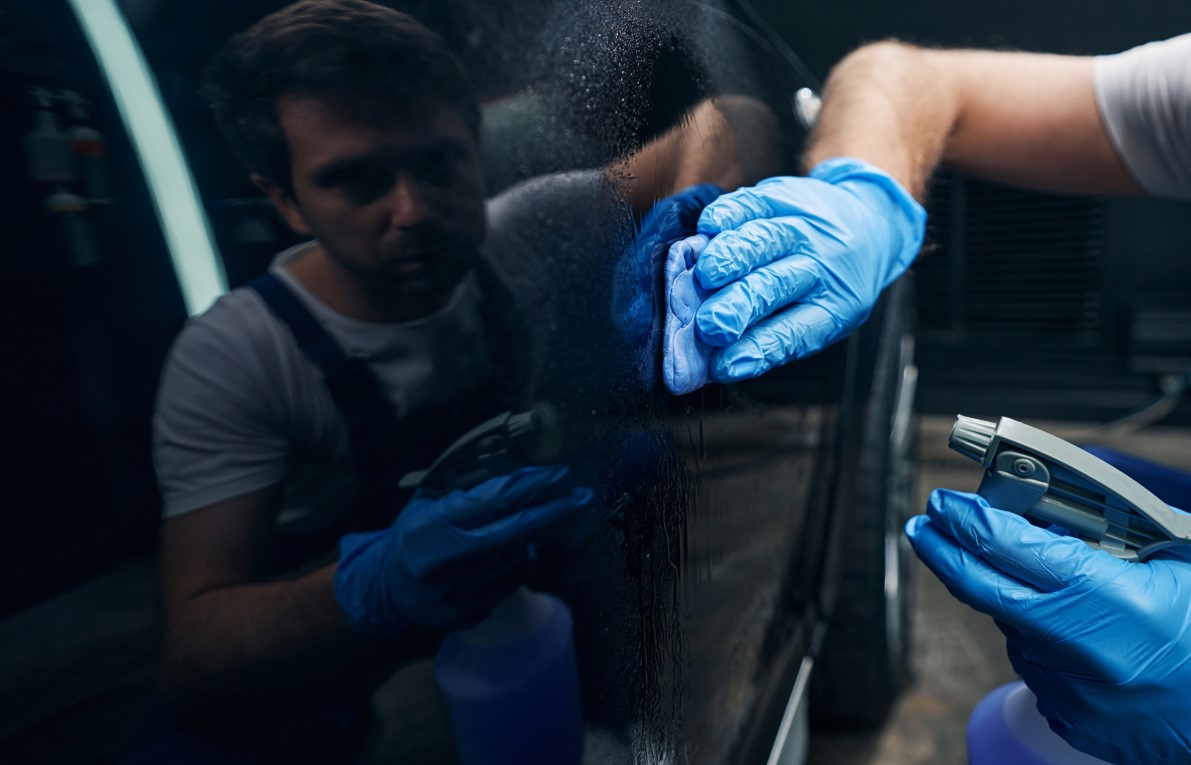
Degreasers are chemical products used for cleaning. There are different types available, and it is important to know them since their uses can be endless. If you are looking to learn more about them, below we explain exactly what a degreaser is, the types of degreasers and their applications.
What exactly is a degreaser?
Degreasers are substances with an alkaline composition capable of removing the presence of fats and oils from any surface through a chemical reaction that occurs upon contact.
Degreasers help remove dirt, making cleaning easier.
On the other hand, it is important to know that depending on their intended use, they are classified into two types:
- Domestic
- Industrial.
Generally, the latter are much more powerful due to their formulation and concentration, providing better cleaning.
In the case of domestic degreasers, these are not only used in homes, as this classification also includes those used to clean all types of surfaces, those used to clean restaurants and even work offices.
They have moderate cleaning action and their price is quite economical because they are generally ready-to-use products (not concentrated).
While industrial-type degreasers, are those that guarantee thorough cleaning, as their composition is much more concentrated and the removal of accumulated fats and oils is cleaned much more easily. They have more powerful cleaning action.

NEOGRAS FORTE CÍTRICO
Types of degreasers
Beyond the classification according to their uses, degreasers have another very important classification based on the chemical composition of the alkaline substance. Depending on the type of dirt to be removed, you will choose:
– Solvent-based, the dissolution action of oils and fats is produced by a chemical reaction of the solvent, since this allows the dehydration of the fat molecule that resides on a surface.
– Water-based, this type of degreaser acts as an emulsifier for fats and oils, as when it acts on these molecules, they detach from the surface, and upon losing their adhesion to it, their removal becomes much easier.
– Organic, the degreasing action of this type of substance is very similar to that of solvents, as it allows fat dissolution. However, the clear difference lies in the product base, which comes from hydrocarbons.
– Inorganic, this is a degreaser formulated with a water base, and like those of this type, they help with emulsion between fat and water. Generally, they are more neutral than the three we recently mentioned and are excellent for when the weather is very hot or very cold.
Uses or applications of degreasers
Now that we already know what a degreaser truly is, how it works and its most common classifications, it is time to discuss its applications.
Its applications are really endless, but for the purposes of this explanation we will describe the most common cases:
-
-
Kitchen, it is used to clean utensils, remove grease from any part of ceramics, clean appliances (especially those made of stainless steel), clean windows, the stove, the oven, the floor, the hood, the shelves, among other places where grease or oil may be present.
-
Bathroom, they are excellent for cleaning shelves, tiles, ceramics, tubs, sinks, floors and even cabinets (if applicable).
-
House floors, this is the surface most prone to becoming dirty from any type of grease, for example: dog urine, which becomes greasy and if not cleaned with degreaser the entire surface becomes sticky.
-
Upholstery, large quantities should not be applied, but rather with a damp cloth, so the fabric is not damaged and staining is avoided.
-
On vinyl paper, it has the ability to remove stains and paints that have fallen on it.
-
Plastic toys, they help eliminate the dirt that sticks to them.
-
Pots and pans.
-
Grill grates, to remove grease that has stuck to them.
-

 Neoquimito