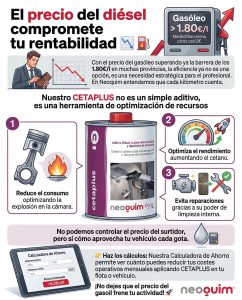
Diesel additives are chemical compounds that are added to the fuel to improve its quality. Additives can have different functions, including improving lubricity, reducing deposit formation, increasing cetane, improving low-temperature flow, among other benefits.
Let’s take a closer look at these benefits:
1- Improvement of lubricity: some diesel additives are designed to improve the lubricity of the fuel. This helps reduce engine wear and increase fuel efficiency.
2- Reduction of deposit formation: another benefit for diesel is the reduction of deposit formation in the engine. Cleaning additives can reduce the buildup of carbon and other deposits in fuel injectors and in the combustion system.
3- Cetane increase: Diesel cetanes measure the time it takes for the fuel to ignite. Diesel additives can increase the fuel’s cetanes, improving engine performance and reducing exhaust emissions.
4- Improvement of low-temperature flow: some diesel additives are designed to improve fuel flow at low temperatures, reducing the risk of filter blockage and other cold-related problems.
There are various types of diesel additives available on the market, each with its own characteristics.
When choosing a diesel additive, it is important to consider the specific needs of the vehicle and the engine, as well as the recommendations of the additive manufacturer.








 Neoquimito